Let’s Talk About All That Highland Hair
As fall settles in and those cold, brisk mornings make me want to stay snuggled under the covers, our calves seem to have other ideas.
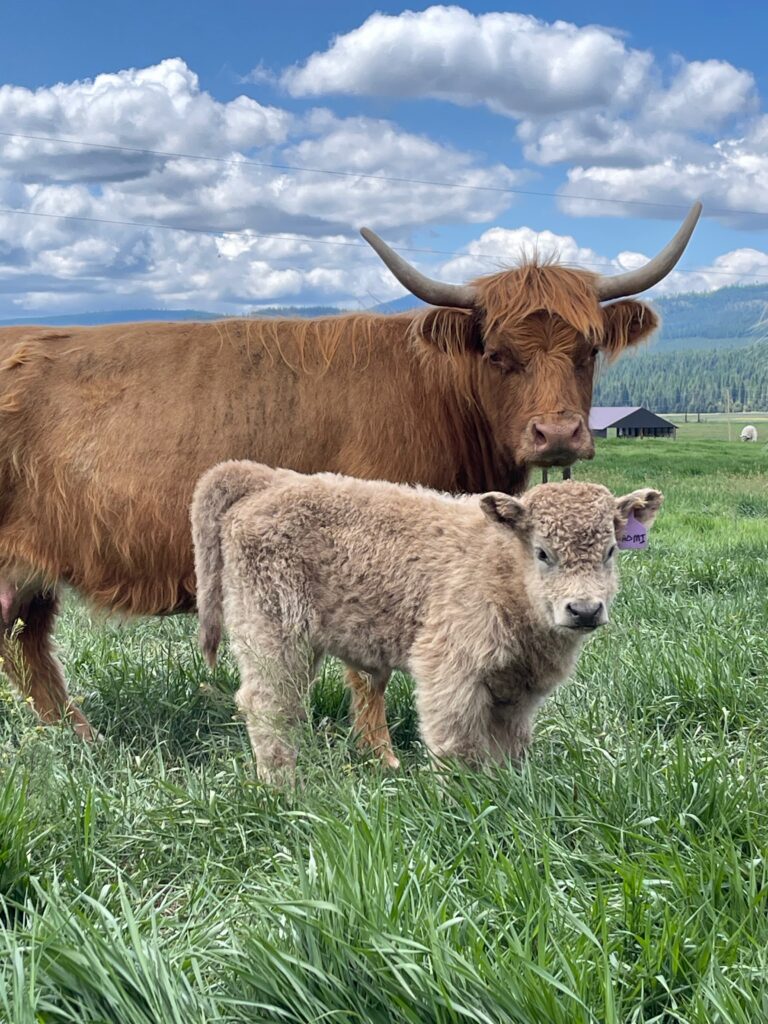
Their Highland and Belted Galloway hair is coming in thick and fluffy, and honestly, they are much better prepared for winter than I am.
This time of year always gets me thinking about hair—specifically, all the questions and comments I get about how much hair a miniature Highland calf should have.
“Why isn’t that calf fluffier?”
“Wouldn’t a higher-percentage Highland have more hair?”
“Will mine look like those calves I see online?”
Those are fair questions. When you fall in love with a fluffy calf, the fluff is part of what melts your heart. I get it. Who doesn’t love a fluffy cow💕
Does Highland percentage matter?
Absolutely. Highland genetics matter when it comes to Highland hair.
But percentage alone doesn’t tell the whole story.
A full Highland usually means you can expect that classic, shaggy coat. But just like people, every Highland is a little different, and the genetics from the other side of a cross matter, too.
Belted Galloways, for example, also have a double coat with a shorter undercoat and a longer, shaggy outer coat. They bring their own hair to the family tree.
With the right pairing, a 50% Highland cross can be just as fluffy as a full Highland. But that doesn’t mean every 50% calf will be, or that every higher-percentage calf will have the same coat. They like to keep us guessing.
For me, percentage is just one piece of the puzzle. I always like to look at the parents, and if I can, peek at other calves from that pairing.
The calf, of course, doesn’t bother to read its paperwork before deciding how much hair to grow.
“But your calves don’t look very fluffy in summer.”
Sometimes they really don’t!
Highlands shed, too. That beautiful winter coat doesn’t stay the same all year. The American Highland Cattle Association describes their double coat and notes that Highlands shed in spring and can grow less hair in warmer climates.
So comparing a calf in July with one photographed in November can give you a totally different impression.
That July calf might be out in the pasture in its summer clothes, while the November calf has already unpacked its winter wardrobe.
Neither picture necessarily shows what that animal looks like year-round.
What about their baby hair?
A calf’s coat can change a lot as it grows. They do shed their baby fuzz, and seasonal shedding continues. I would be cautious about treating one awkward hair stage as a final verdict on its adult coat.
Some of us would appreciate that same courtesy with our old school pictures, too, lol.
A little perspective on those fluffy pictures
A freshly bathed, brushed, and blow-dried calf can look pretty different from that same calf out in the pasture.
There is nothing wrong with grooming a calf. Ours get baths and get blow-dried when they’re getting ready for their new homes, too.
I like to share everyday pictures and videos along with those cleaned-up moments. You might spot some mud, a bit of hay in a forelock, or even bedhead.
That’s life here. Mine aren’t always photo-ready.
Sometimes you need to see the grown-up version
This is where I think pictures explain it better than I ever could.
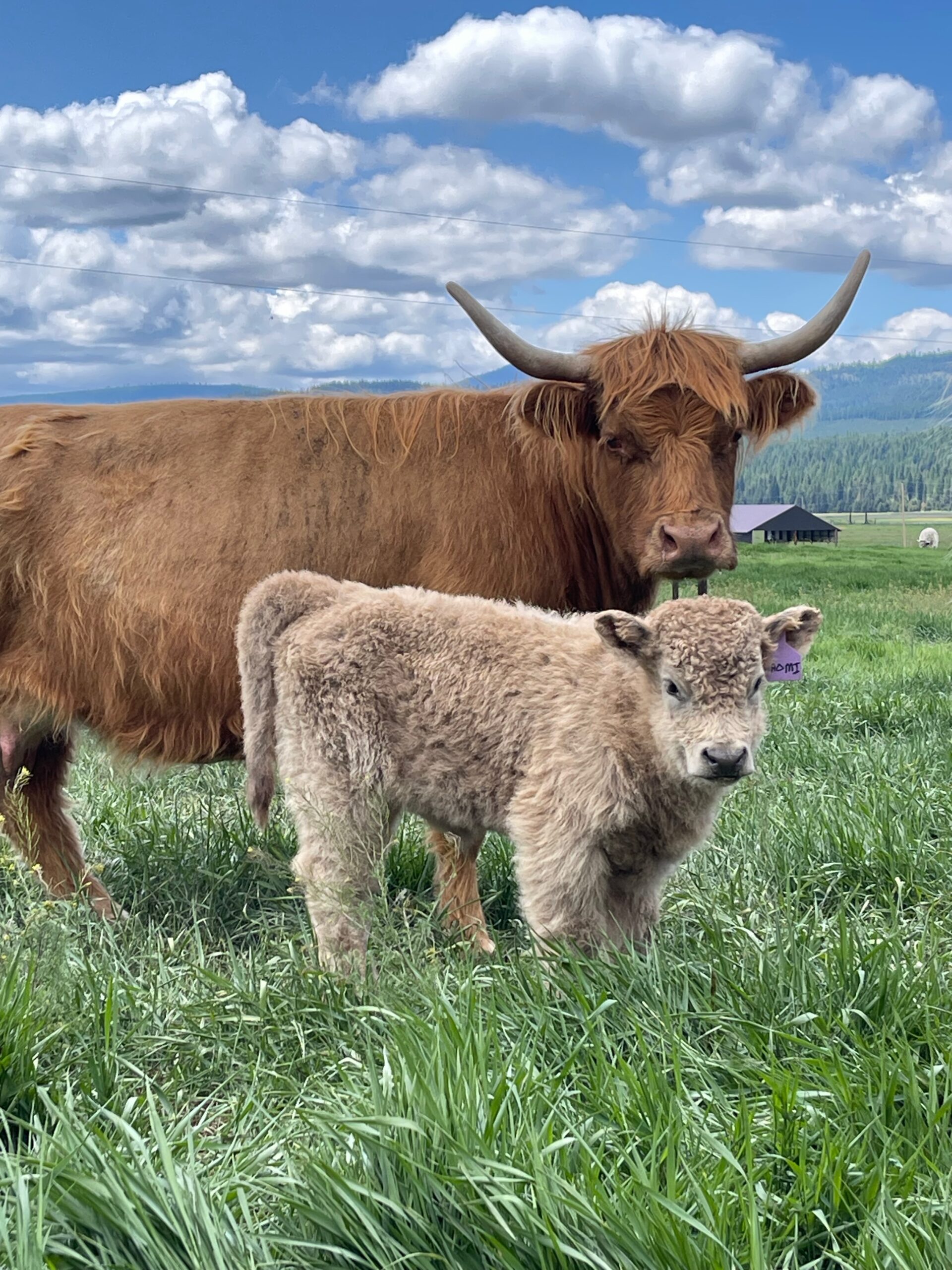
This is a 100% Highland calf in the spring. She looks moderatly fluffy, but nothing crazy.
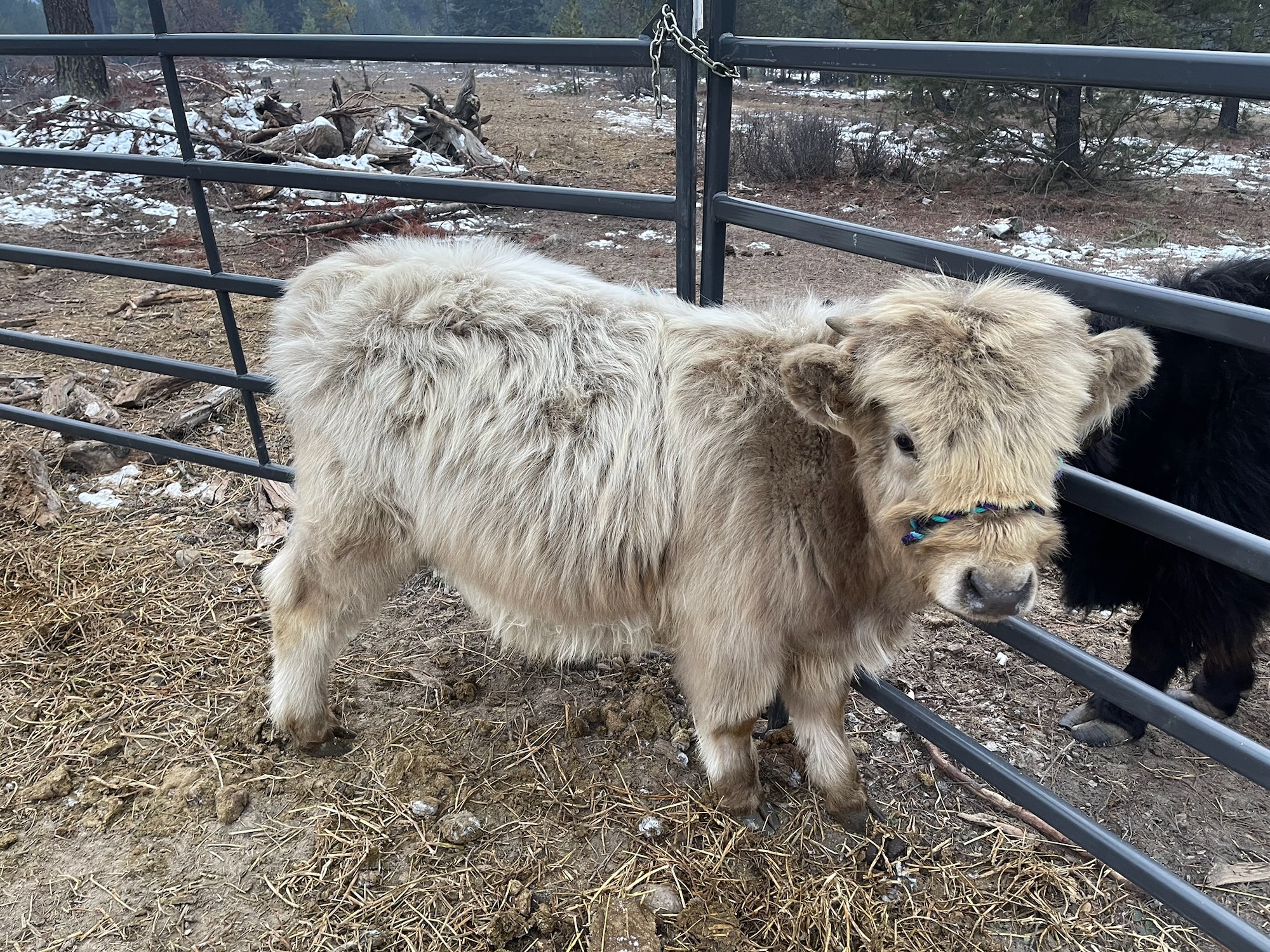
This is the same calf at weaning in the fall
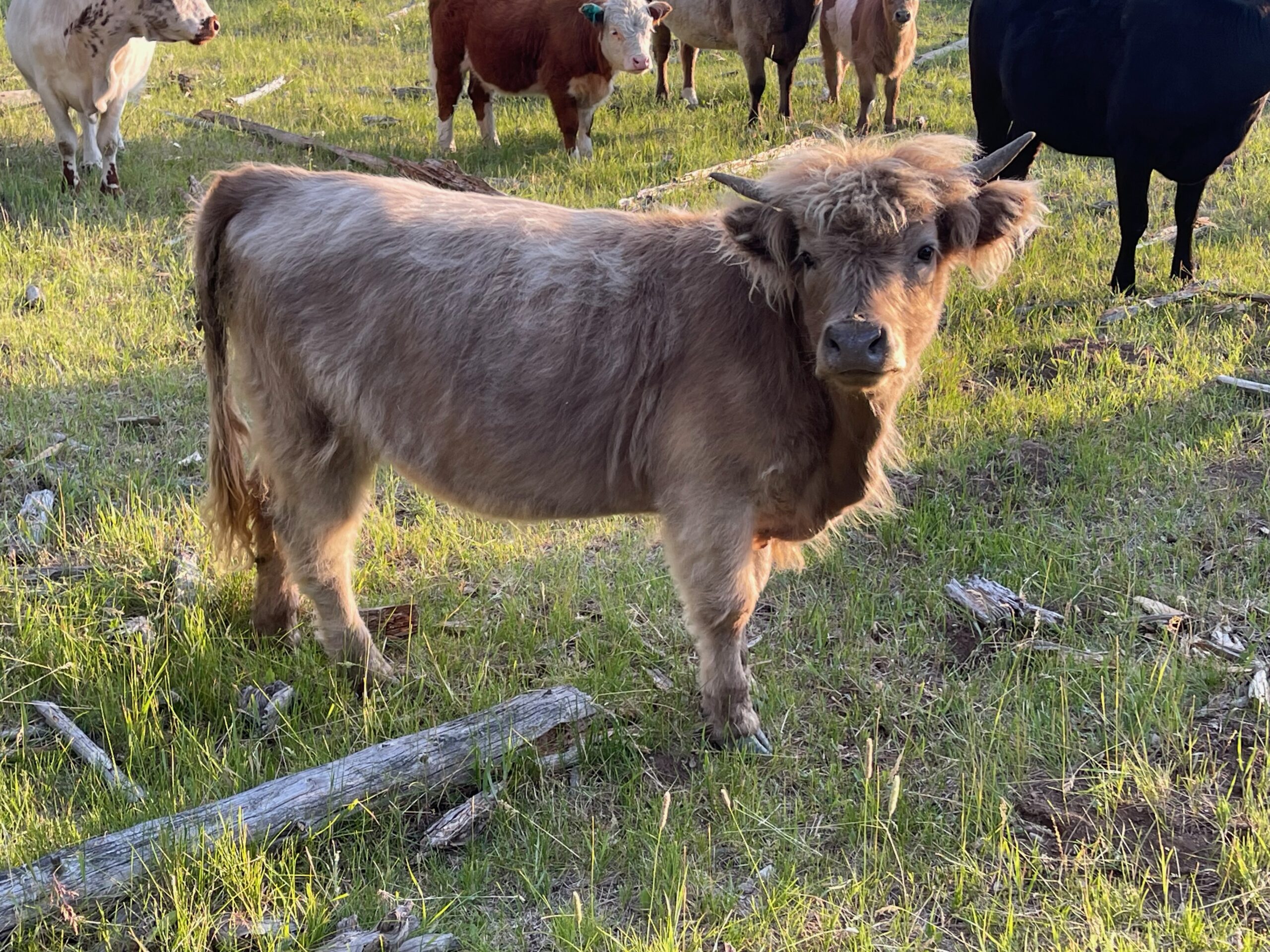
Same calf in the summer as a yearling

Same gal in the fall of her yearling year
When you look at these, notice both the age and the season. A spring calf next to a fall calf at weaning shows just how much can change. Then in her next two pictures from summer to fall.
That’s why I love seeing lots of pictures over time—parents, older siblings, summer coats, winter coats. Together, they tell us so much more than one especially fluffy photo.
Less hair today doesn’t settle the question
A calf that looks a little less hairy right now might still grow up into a beautifully shaggy cow.
But I also wouldn’t promise that every short-coated calf will turn into a walking haystack. Genetics matter!
My advice is to ask questions, look at the dam and sire, and think about the calf’s age, the season, and whether it just had its own Brazilian blowout.
And while you’re admiring all that hair, take a look at the rest of the calf, too. Temperament and good structure matter long after that first cute picture.
Ray and I love a small, hairy calf just as much as anyone. But we also want a well-built animal that fits with the family taking it home.
The fluff is wonderful. I’m certainly not going to pretend otherwise.
I just think all that fluff deserves a little context.
Now, if you need me, I’ll be out admiring everyone’s winter hair and trying to convince myself it’s finally time to dig out my heavier coat.